
UK Civil Engineering Consultancy
When Capability Outgrows Perception: Repositioning a Civil Engineering Firm for Expansion and Diversification
A nationwide civil engineering consultancy with decades of technical expertise reached a point where its ambition outpaced how it was perceived in the market. While delivery capability was strong, legacy positioning limited early-stage credibility, constrained access to higher-value opportunities, and restricted the firm’s ability to diversify into adjacent built-environment sectors. This case study explores how strategic repositioning, improved visibility and commercial alignment created headroom for sustainable growth and expansion.
The Perception Gap
Despite decades of experience delivering complex civil engineering projects across the UK, the business had outgrown how it was perceived in the market.They were seen as a traditional civil engineering consultancy, which created three commercial constraints:
Limited growth headroom – their positioning made it difficult to credibly expand into adjacent built-environment sectors such as ecology and environmental services.
Early-stage credibility gap – their brand and digital presence did not reflect the corporate professionalism required to influence larger organisations early in the buying cycle.
Competitive pressure – without clear differentiation and authority, opportunities increasingly became price-led and tender-driven rather than relationship- and value-led.
Internally, leadership had a clear ambition to evolve into a more corporate, multi-disciplinary consultancy. Externally, the market had not caught up.The result was a growing gap between what the business was capable of and what the market believed it could do.
Rather than treating this as a branding exercise, we acted as a Commercial Growth Partner, focusing on repositioning the business to unlock long-term growth and diversification.Our work centred on three core areas:
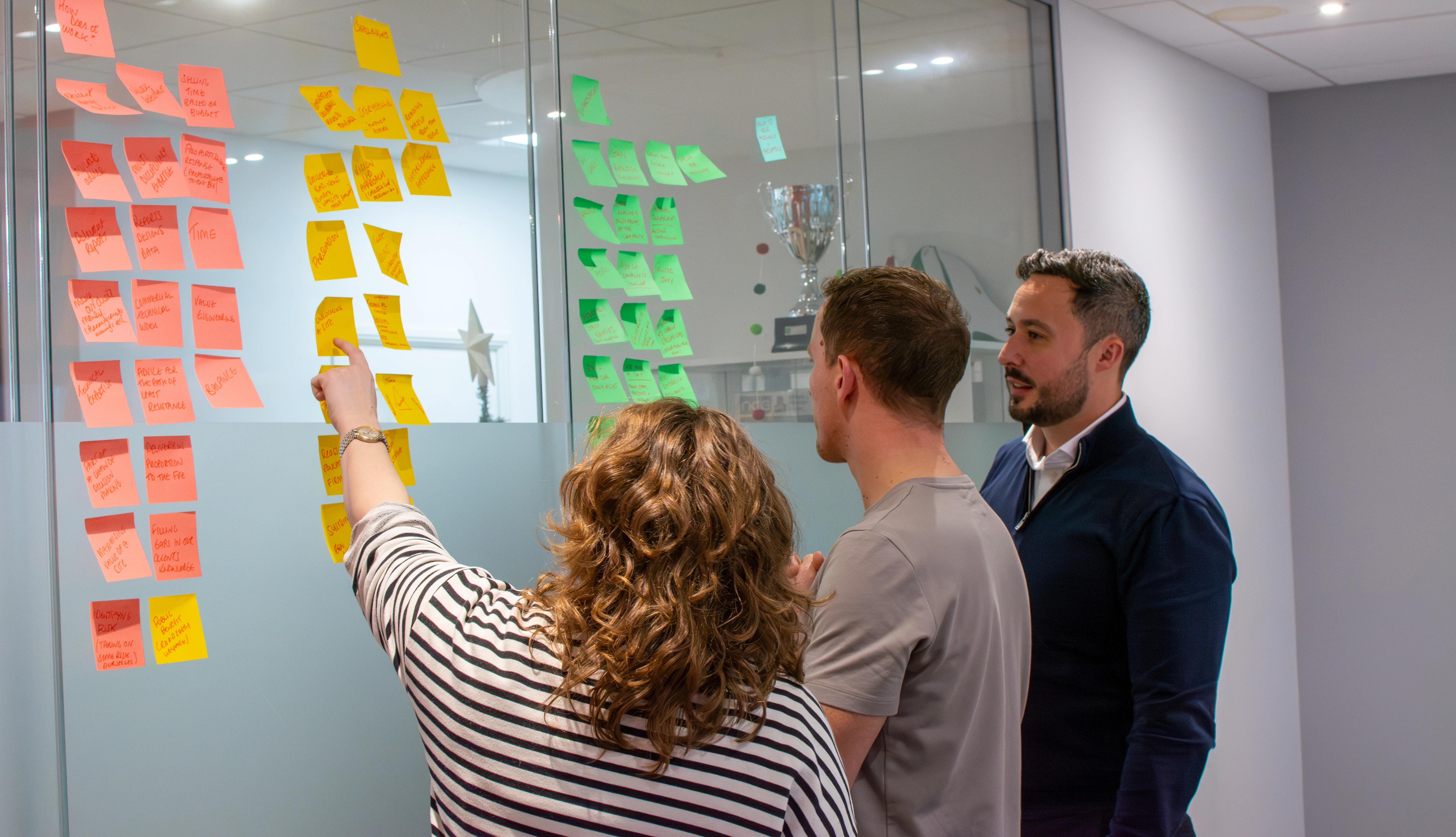
Commercial positioning – working with senior stakeholders to redefine how the business should be perceived, not just today, but as it expands into new built-environment disciplines. The objective was to create positioning headroom without undermining existing credibility.
Market perception & visibility – rebuilding the firm’s website and digital presence so that decision-makers could immediately recognise scale, professionalism and strategic capability during early-stage research. This included clearer messaging, stronger structure and content that supported corporate-level scrutiny.
Strategic alignment – ensuring the external narrative aligned with leadership ambition, future service expansion and talent attraction, so the business could grow sideways into new sectors as well as upwards into larger projects.
Every decision was made through a commercial lens: reducing buyer risk, increasing early-stage trust, and giving the business permission to compete in broader, higher-value spaces.
The repositioning delivered tangible commercial impact:The business is now positioned as a corporate, future-focused consultancy, not a purely traditional civil engineering firm.
The new positioning created credible headroom for diversification into adjacent built-environment sectors.
Early-stage perception with larger organisations improved, strengthening confidence before tenders were issued.
The firm reduced reliance on late-stage persuasion and price competition.
Employer brand and talent attraction improved, supporting long-term capability growth.
Most importantly, the market perception of the business now aligns with its ambition — enabling growth that is intentional, diversified and sustainable.




Stop guessing. Start growing.
Book your Growth Assessment and let’s build your growth engine.


